Core "Thinkings" #2 of 3: Patriot. Antiracist. And Born on the Semiquincentennial Fourth of July.
Or, Why I Love the Fourth of July (and Very Long Titles) Again
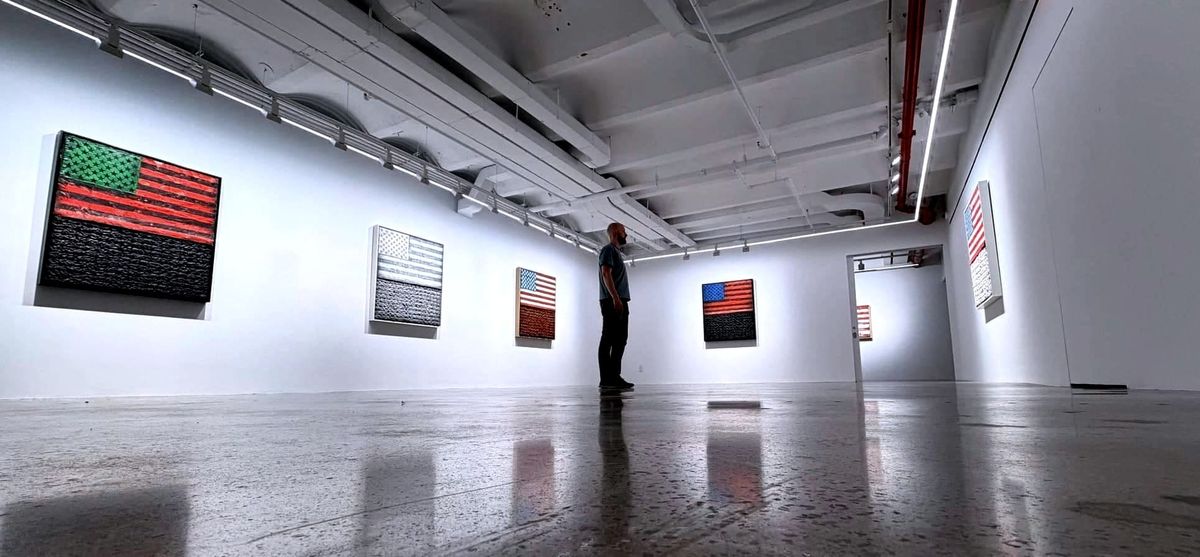
The U.S. celebrates 250 years today and many Americans struggle to celebrate because we feel like kids whose dysfunctional pageant-parents embezzle our money, stole our neighborhood from American Indians, and made Black and Brown people build the houses without letting them live there. For some, the fundamentals of our story invite the question of how any moral person could experience patriotism toward such a place. They are understandably less excited about the 250th anniversary than others might wish they would be. Even the hyper-zealous Americans complain so much—about Blacks, trans people, immigrants, religion, lack of religion, or whatever—that it seems like their Fourth of July anthem should say, “There are some significant doubts about whether I love this land.”
Maintaining clarity on the reality that “America” happened (and happens) to Black and Native peoples—and others—here and abroad may be crucial to maintaining our conscience. Its size and power largely resulted from atrocities, and many communities continue to face clear and present dangers. Turning away from ongoing incarceration schemes, exploitative (mis)education, and countless other aggressions is to look at lives shattered by violence and to deny them, thereby adding spiritual and cultural erasure to the destruction of bodies. And I’ll give a special acknowledgment to the Philippines, who gained their independence from brutal U.S. colonization in 1946. And on July 4, no less.
But like I intimated in my Juneteenth post, oppressors should not be conceded the right to define a place. Black, Native, and other abused peoples (women, gay and lesbian and bisexual, trans and nonbinary folks, Jews and Catholics and Mormons and Muslims, Asians and Islanders and Latinos, and frankly, a lot of White people—even straight, White men—just to name a very few) have, at their best, collaborated with the better angels of human nature to make “America” much more than it would be if oppressors had their way.
These are the reasons I am choosing to celebrate 250; a history of truly remarkable people from so many backgrounds have reached for the highest ideals of humanity, and they are all, also “America.” In any case, I’m tired of having my mood ruined by people who are “patriots” for stupid reasons.
And this audacity to look at the world and say “We can make this better and fairer” is what inspires my patriotism. As discouraging as America’s failures are, the aspirational, promissory nature of the Declaration of Independence and Bill of Rights, among other things, motivated me to start posting my Thinkings and Jokings publicly, even though I’m not nearly as good at either as I wanted to be before sharing those with others. (Shoutout to a post by Josh Johnson, too, which happened to go live right as I was faltering before publishing my Juneteenth post.)
When I called this entry “Patriot. Antiracist. And Born on the Semiquincentennial Fourth of July” I meant not only that I love absurdly long titles, but that I see a way forward that aligns patriotism with radical antiracism in a zero-tolerance policy toward oppression. To be antiracist is to recognize the necessity of finding the overarching truths, systems, powers, and values that make equality possible and meaningful. “America,” at very least, is a place where I can seriously explore and write and joke and work to find out what that means.
Another day I have more to share about how I think we can integrate patriotism, antiracism, and religious freedom into the same project of love and justice. For today, all I’ll say is that I hold it as self-evident that the famous words Thomas Jefferson wrote are true and that his enslavement and elimination of humans was inexcusably wrong.
I hold some things as self-evident and I don’t enslave people or steal their land. So I guess I’m like a founding father, but better.